





Grid-Off Inverters vs Grid-Tied: Pros, Cons, Applications
- How inverters work: basic principles and topologies
- AC/DC conversion and power flow
- Waveform types and power quality
- Topologies: standalone, grid-tied and hybrid
- Comparative analysis: grid-off vs grid-tied inverters
- Key functional differences
- Pros and cons summarized
- When one topology is clearly preferable
- Applications and real-world use cases
- Off-grid homes, remote communities and industrial field sites
- Solar-plus-storage: hybrid and battery-based grid interaction
- Mobile, automotive and recreational vehicles (RVs)
- Selecting the right inverter: technical and economic criteria
- Power sizing, surge capacity and load types
- Certifications, safety and lifecycle reliability
- Total cost of ownership and system economics
- Practical checklist before purchase
- Manufacturer and product capabilities: Guangzhou Congsin Electronic Technology Co., Ltd.
- Installation, commissioning and maintenance tips
- Proper site preparation
- Commissioning and grid interconnection
- Routine checks and lifecycle care
- Frequently Asked Questions (FAQ)
- 1. What does inverter grid off mean?
- 2. Can a grid-tied inverter work when the grid fails?
- 3. Which is more efficient: grid-off or grid-tied?
- 4. Do I need a pure sine wave inverter for off-grid use?
- 5. How should I size batteries for an off-grid inverter?
- 6. What certifications should I look for when buying an inverter?
- Contact and product inquiry
This article examines the technical differences, advantages and limitations between grid-off (off-grid) and grid-tied inverters with a focus on real-world applications and decision criteria. It uses the keyword inverter grid off in context to help search engines and local GEO-aware services understand intent and relevance. The analysis links to authoritative standards and industry sources to support recommendations and provide verifiable guidance for system designers, installers and end users.
How inverters work: basic principles and topologies
AC/DC conversion and power flow
An inverter converts DC power (from batteries or photovoltaic arrays) into AC power suitable for loads or for feeding a grid. Grid-tied inverters synchronize frequency and phase with the utility grid to inject power safely, while grid-off inverters operate independently, creating an AC waveform and managing local loads when the grid is absent. For a concise technical overview, see the Wikipedia entry on inverters: https://en.wikipedia.org/wiki/Inverter_(electrical).
Waveform types and power quality
Inverter output can be modified sine wave, pure sine wave, or quasi-sine depending on topology. Pure sine wave inverters offer the highest compatibility and lowest harmonic distortion, which is important for sensitive electronics and motor loads. Many off-grid systems require pure sine output to avoid issues with appliances and to improve power factor and efficiency.
Topologies: standalone, grid-tied and hybrid
There are three general classes: standalone (true off-grid), grid-tied (utility-interactive), and hybrid (can operate grid-tied and off-grid with battery management). Hybrid inverters provide flexibility in solar-plus-storage systems and are often marketed as grid-interactive or battery-based grid-tied. For technical design guidance related to interconnection and grid interaction, consider the IEEE interconnection standard IEEE 1547: https://standards.ieee.org/standard/1547-2018..
Comparative analysis: grid-off vs grid-tied inverters
Key functional differences
Grid-tied inverters are optimized to export energy to the grid and must follow grid-safety protocols (anti-islanding, synchronization). Grid-off (off-grid) inverters are designed to regulate local voltage and frequency without grid reference, usually including a built-in charger and transfer switch for generator support. The term inverter grid off often describes inverters intended primarily for off-grid operation or for when grid connection is unavailable.
Pros and cons summarized
Below is a practical side-by-side comparison to help choose the right topology for your installation.
| Feature | Grid-Off (Off-Grid / Standalone) | Grid-Tied (Utility-Interactive) |
|---|---|---|
| Primary use | Remote homes, cabins, mobile vehicles, sites without utility access | Grid-connected PV systems, export energy, net metering |
| Battery integration | Built-in, essential for energy storage and load management | Optional (hybrid variants) — many pure grid-tied systems work without batteries |
| Power quality | Depends on design; high-quality pure sine inverters provide stable output | High — synchronized to grid waveform and frequency |
| Safety / standards | Requires local protection and proper earthing; anti-islanding not applicable | Must comply with interconnection standards such as IEEE 1547 |
| Cost profile | Higher initial system cost per kW because of batteries and controls | Lower initial cost if batteries are omitted; ROI depends on tariffs and incentives |
| Typical efficiency | 85%–95% depending on inverter and battery converter stages | 95%–98% for modern string and central inverters (AC coupling reduces losses) |
Sources for efficiency and inverter information include manufacturer datasheets and industry summaries such as EnergySage's inverter guide: https://www.energysage.com/solar/solar-inverters/, and technical reports from the U.S. National Renewable Energy Laboratory (NREL): https://www.nrel.gov/docs/fy09osti/45746.pdf.
When one topology is clearly preferable
Choose grid-off inverters when no reliable utility is available or when full energy independence is required. Choose grid-tied inverters when you have grid access, seek lower equipment cost, and want to export surplus energy. For mixed objectives—backup during outages plus grid export—select hybrid or inverter/charger systems that support both modes.
Applications and real-world use cases
Off-grid homes, remote communities and industrial field sites
Off-grid inverters are common in rural electrification, telecom base stations, temporary construction camps and remote scientific stations. Designers must size battery capacity to meet autonomy requirements (hours or days of backup). Energy management, load prioritization and efficient energy use are crucial to minimize battery cycling and extend life.
Solar-plus-storage: hybrid and battery-based grid interaction
Hybrid inverters combine PV input, battery storage and grid interconnection, enabling time-shifting of solar energy, peak shaving, and backup power. These systems support energy arbitrage where tariffs vary by time-of-use. For compliance and interconnection rules, consult local regulations informed by IEEE 1547 and utility technical requirements.
Mobile, automotive and recreational vehicles (RVs)
Portable power stations and vehicle-mounted inverters (modified sine and pure sine models) allow AC appliance operation on the go. Important parameters include surge capacity for motors, continuous rating, weight, cooling and IP protection for outdoor use. Guangzhou Congsin's product range includes models tailored for vehicles and RVs; more on their capabilities appears later in this article.
Selecting the right inverter: technical and economic criteria
Power sizing, surge capacity and load types
Calculate continuous load and peak (starting) currents. Motors, compressors and some pumps require 2–6× starting current; choose an inverter with sufficient surge rating and battery/distribution wiring sized accordingly. Also account for inverter efficiency when estimating battery capacity and PV array sizing.
Certifications, safety and lifecycle reliability
Look for products with ISO9001 quality management (for manufacturer processes), and product-level approvals such as CE, EMC, LVD, ETL, FCC, RoHS and E-MARK depending on your market. ISO9001 provides assurance of consistent manufacturing quality: https://www.iso.org/iso-9001-quality-management.. Compliance with local grid interconnection regulations and components' safety standards reduces installation risk and helps with permitting.
Total cost of ownership and system economics
Compare initial capital cost, expected lifespan, maintenance, battery replacement intervals and efficiency losses. Off-grid systems carry higher battery-related lifecycle costs; however, in remote areas where grid connection costs are prohibitive, off-grid systems are cost-effective compared to extending utility infrastructure.
Practical checklist before purchase
- Define use case: backup-only, daily off-grid, or grid-interactive.
- Estimate continuous and peak loads and runtime requirements.
- Decide on waveform (pure sine recommended for sensitive loads).
- Verify certifications and manufacturer test data.
- Plan for ventilation, ambient temperature derating and installation location.
Manufacturer and product capabilities: Guangzhou Congsin Electronic Technology Co., Ltd.
Guangzhou Congsin Electronic Technology Co., Ltd., founded in early 1998, is a professional power inverter manufacturer with over 27 years of focused experience. We design, R&D and manufacture a wide range of power solutions—with a core emphasis on DC→AC power inverters, portable power stations, and solar charge controllers. Our catalog includes 100+ models tailored for vehicles, solar systems, RVs and trucks, off-grid homes, outdoor offices, patrol and field construction work.
We operate fully automated production lines, advanced instrumentation and multifunctional testing equipment to ensure product reliability, efficiency and intelligent functionality. Environmental and safety compliance are built in: our quality system is ISO9001 certified and many products hold international approvals such as CE, EMC, LVD, ETL, FCC, RoHS and E-MARK. Several independently developed patents further demonstrate our commitment to innovation.
Congsin’s products serve global markets across Europe, the Americas, the Middle East, Africa and Southeast Asia; many models are supplied to domestic and international OEM channels. Our support includes OEM/ODM, private labeling, distribution and bespoke customization to meet partner specifications. Our mission is to deliver reliable, efficient and affordable energy solutions that enable energy independence.
Key product highlights relevant to inverter grid off and hybrid applications include Solar Charge Controllers, modified sine wave inverters, pure sine wave inverters, and portable power stations. Congsin differentiates through long manufacturing experience, automated quality control, broad model range, and compliance with international approvals—making them a candidate supplier for projects requiring off-grid inverter solutions or hybrid grid-tied systems with storage.
Installation, commissioning and maintenance tips
Proper site preparation
Ensure a dry, ventilated and secure location for inverter and battery bank. Use appropriate DC cabling with correct insulation and torque on terminals. Follow manufacturer installation guides and local electrical codes.
Commissioning and grid interconnection
For grid-tied and hybrid systems, ensure anti-islanding tests and interconnection settings are configured per utility requirements. Engage qualified electricians and obtain necessary permits. For standards guidance, consult IEEE 1547 and local utility documentation: https://standards.ieee.org/standard/1547-2018..
Routine checks and lifecycle care
Regularly inspect cooling fans, heat sinks, and battery connections. Monitor system logs where possible—many modern inverters and portable power stations provide telemetry for performance and fault diagnostics that can extend service life and improve availability.
Frequently Asked Questions (FAQ)
1. What does inverter grid off mean?
Inverter grid off typically refers to an inverter operating in standalone/off-grid mode—producing AC power without referencing or relying on the utility grid. These inverters manage voltage and frequency locally and require energy storage or a generator for continuous supply.
2. Can a grid-tied inverter work when the grid fails?
Most pure grid-tied inverters shut down when the grid fails (for safety) unless they are hybrid models with battery-based backup. To get backup functionality, specify an inverter/charger or hybrid inverter that can island and power selected loads during outages.
3. Which is more efficient: grid-off or grid-tied?
Modern grid-tied inverters often show higher nominal conversion efficiency (95%–98%) because they synchronize directly with the grid and avoid extra conversion stages. Off-grid systems can have lower overall round-trip efficiency due to battery charging/discharging losses, but inverter efficiency itself depends on design and model.
4. Do I need a pure sine wave inverter for off-grid use?
Yes—pure sine wave inverters are strongly recommended for off-grid systems to ensure compatibility with sensitive electronics, motor-driven appliances and modern power supplies.
5. How should I size batteries for an off-grid inverter?
Sizing depends on daily energy consumption, desired autonomy (days without sun), depth-of-discharge policy and inverter efficiency. A simple starting point: calculate daily Wh consumption, divide by usable battery capacity (battery bank kWh × allowable DoD), and include a margin for inefficiencies. Work with suppliers to model realistic performance under local climate and load profiles.
6. What certifications should I look for when buying an inverter?
Look for ISO9001 (manufacturer quality), CE/EMC/LVD for European markets, ETL/UL for North America, FCC for communications, RoHS for hazardous substances and E-MARK for automotive applications where relevant.
Contact and product inquiry
If you are evaluating inverter options for off-grid installations or hybrid solar-plus-storage projects, Guangzhou Congsin Electronic Technology Co., Ltd. offers a broad portfolio of inverters, solar charge controllers and portable power stations. For technical consultations, OEM/ODM inquiries or to request datasheets and certifications, contact Congsin's sales and engineering team to discuss custom solutions and price quotations.
Get in touch: Request product catalogs, installation manuals or project quotes from Guangzhou Congsin to identify the optimal inverter grid off or hybrid solutions for your application.
Top 10 2000W Pure Sine Wave Inverters for RVs and Campers
Top 10 modified sine wave inverter Manufacturers and Supplier Brands in 2026
How to Match Inverter Wattage to Your Car Appliances
Top Pure Sine Wave Inverters for RVs and Camping 2026
OEM & ODM Services
Do you provide support for shipping and customs clearance?
Yes, we offer international logistics solutions including export documentation and customs advice.
Modified Sine Wave Inverters
Do you support OEM branding?
Yes, we offer logo, packaging, and label customization.
Can I customize the logo?
Yes, OEM/ODM service is available.
Can 4 USB ports fast charge at the same time?
Yes, 4 USB ports can fast charge mobile phones, tablets and other devices at the same time, meeting the needs of simultaneous charging of multiple devices.
What is the benefit of the UPS function? A2:
It automatically switches to battery power when AC fails.
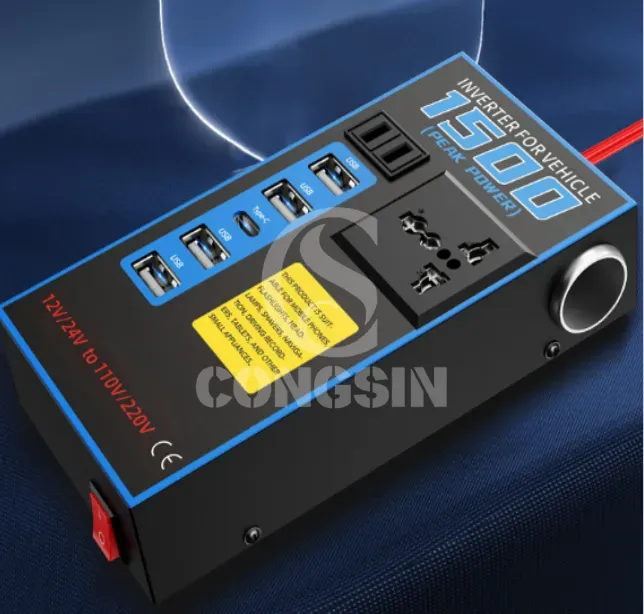
Congsin 1500W Inverter for Vehicle DC 12V/24V to AC 110V/220V with Universal socket Modified Sine Wave
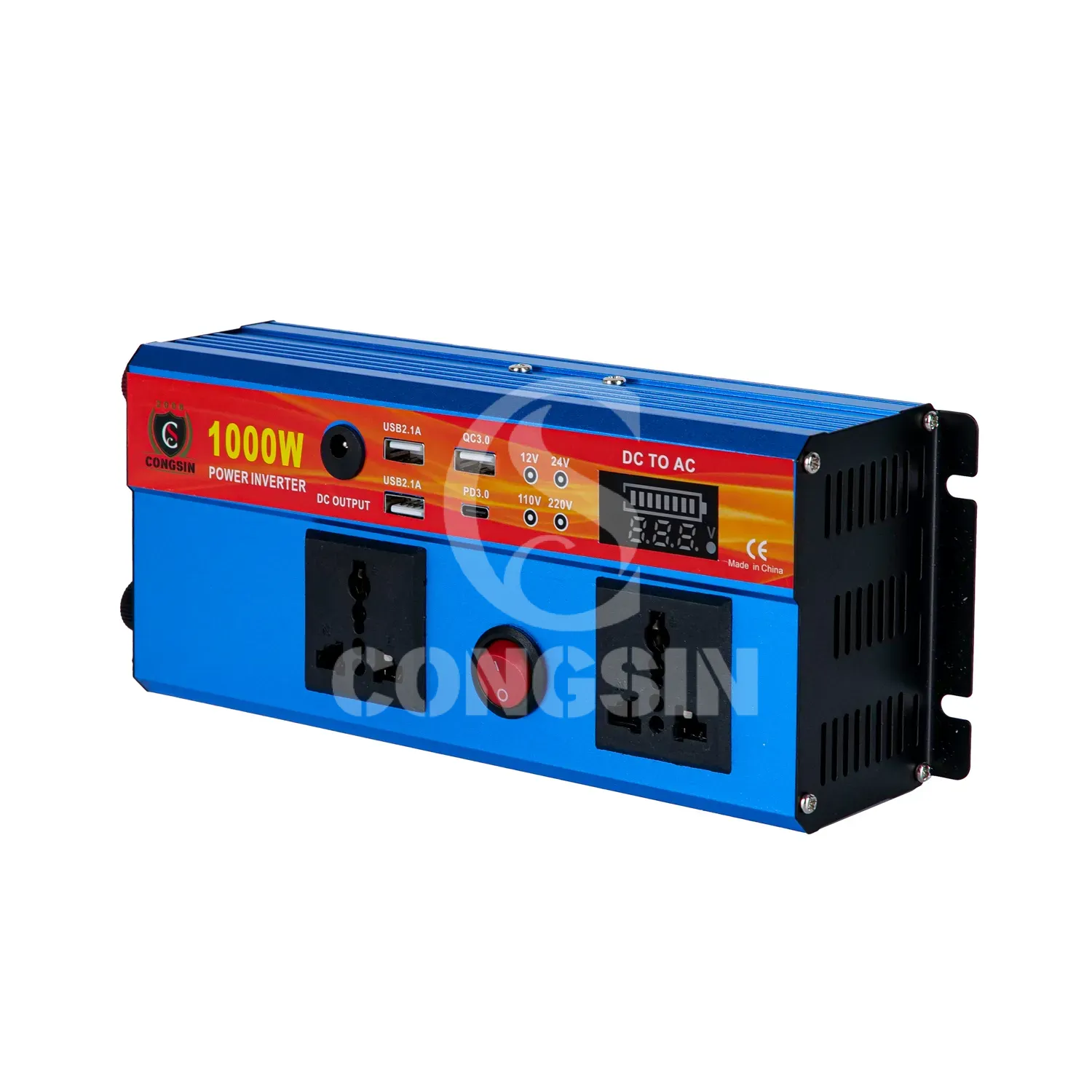
Congsin 1000W modified sine wave inverter with LED display and Type C port car RV power inverter
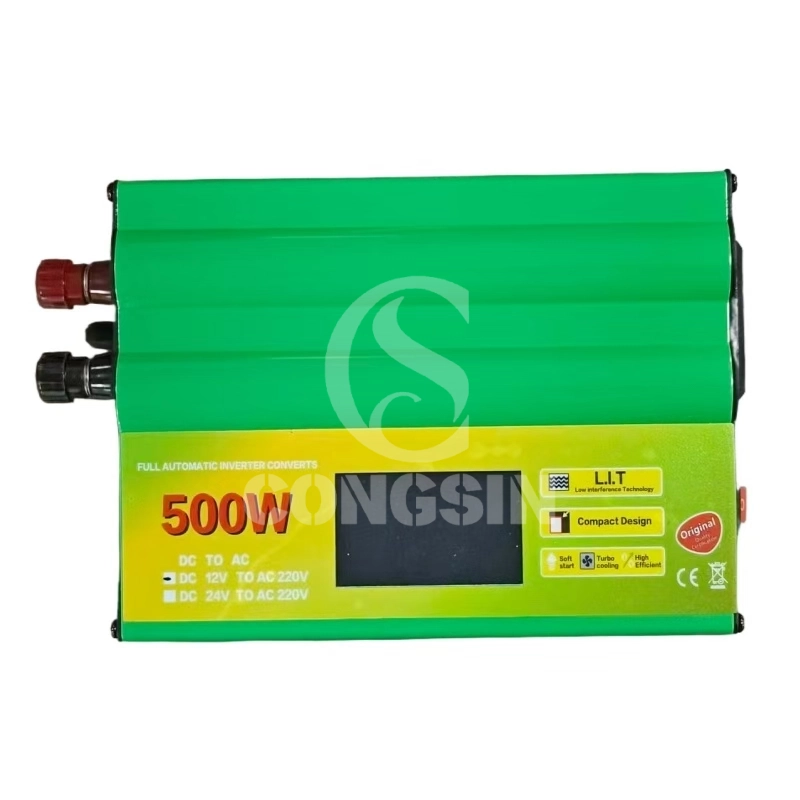
Congsin Modified Sine Wave Inverter 500W 1000W 1500W 12V LED Display Portable for RV Car Solar
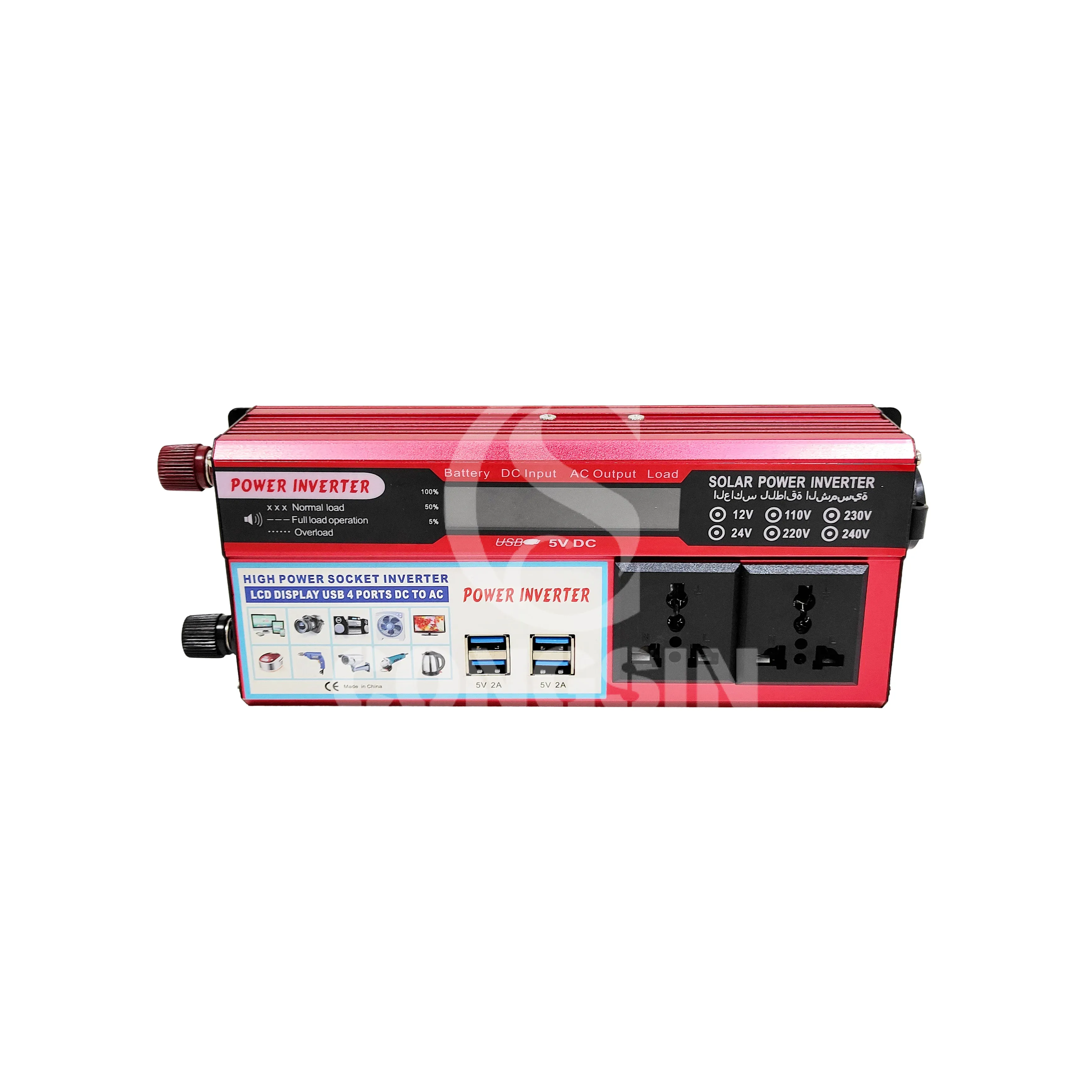
Congsin 1500W modified sine wave inverter with LCD display and USB ports for RV car boat home use

CONGSIN is a trusted OEM factory for power inverters, solar charge controllers, and DC converters. Reliable solutions for global B2B buyers.
 High Quality
 7/24 Service
 Guaranteed Warranty
© 2025 Congsin. All Rights Reserved.